
Easy Ways to Remove Stubborn Stains from Tile Floors
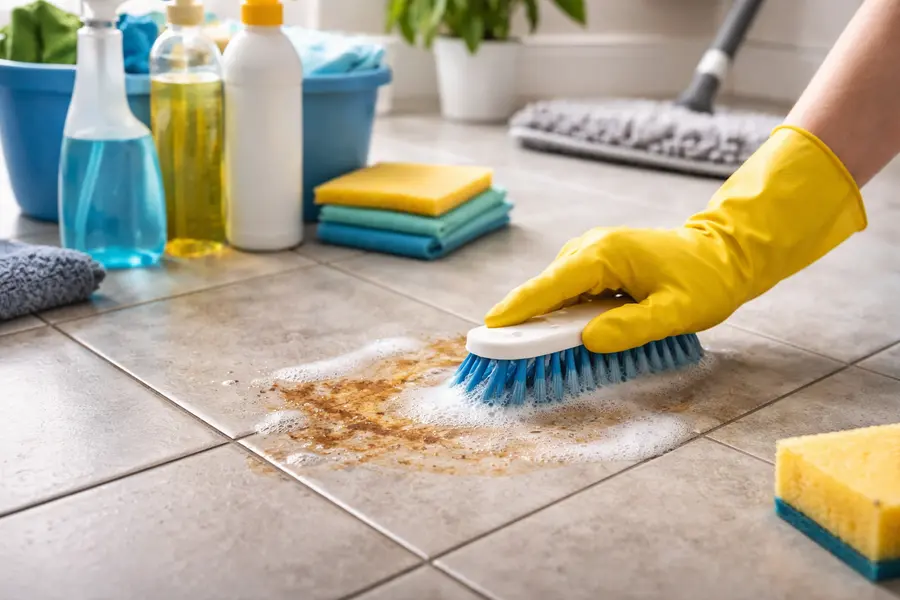
Stubborn Stains: Remove Tough Marks from Tile Floors
Have some ugly places on your tile floor, which will not come out no matter how hard you scrub? And it is quite a frustrating experience to find your initially clean tiles covered in marks or spills or some kind of discoloration that just will not be removed. You will notice, in your kitchen, or your bath-room, or in some other section of your living-room, that tile floors always get dirty, and greasy, and grimey with the passage of time. The good news is that you do not have to live in those ugly spots. And your tile floor can be placed again through the proper process and a simple couple of tricks that would leave it looking clean and fresh.
The tile floors are tough in nature and easy to clean, but the stains cannot be easily cleaned and require additional care. One should know the type of stain it is and then use the relevant cleaning method that would help in producing the best results without necessarily destroying the surface. For deeper or long-standing stains, professional bond cleaners can also be considered for a more thorough and safe cleaning approach
1. Identify the Type of Stain
The first thing that you should know before starting to deep clean is what you are dealing with. There are various stains that should be treated differently. Grease and food spills, rust stains and hard water stains are all different and require individual solutions.
Examples include an oil stain which is sensitive to a degreasing solution, a mineral stain is better done with an acidic solution such as vinegar. It is worthwhile to find out the stain so that you do not waste time and make sure you clean the place.
2. Start with Basic Cleaning
In many cases, a dirty place that looks firm is not a hard place; rather, it is a pile of dirt. And the first thing would be to clean up the floor, that is to sweep out or vacuum clean the floor. Then use a light cleaner of the floor and warm water.
This will remove the dirt on the surface and even the lighter stains will be removed without necessarily applying even stronger solutions.
3. Put Baking Soda on Troubled Areas
Baking soda is a special cleaner which can be applied on numerous types of stains but is mild and effective. Ready a paste of baking soda and a small amount of water, and rub into the spot stained.
Allow 10-15 minutes to pass then softly brush/ scrub using a soft brush or sponge. This assists in raising the stain without scratches on the tiles.
4. Mineral Deposits Try Vinegar
Vinegar can perform miracles to take the whiteness or chalkiness out of your tile floor that has been caused by hard water. Blend an equal quantity of vinegar and water and rub the mixture on the part.
After which it will need to take a couple of minutes rest, and then wipe. Vinegar will be used to wipe off the accumulation of minerals and will restore the original shine on the tile.
Note: Vinegar is not to be applied to natural stone tiles like marble or granite because this would cause damages.
5. Tackle Grease with Dish Soap
Kitchens are especially notorious in grease spots. Grease is soluble in a simple concoction of warm water and dish soap.
Apply the solution, wait some few minutes and scrub. The process can be repeated in highly stained areas.
6. Remove Grout Stains
Grout lines are prone to accumulation of dirt and discolouration over a period of time. Cleaning may be done by use of water and baking soda or a grout cleaner.
Put the paste on the gout lines and rub into the lines with a small brush, e.g. old toothbrush. This will assist in reproducing the original colour and make the general look of your floor lighter.
7. Extensive Stains With Hydrogen Peroxide
Hydrogen peroxide would be an excellent addition to the troublesome, permanent stains. You can either apply it directly on to the stain or you can mix it with baking soda to form a more powerful cleaning paste. Similar methods are also discussed when using hydrogen peroxide for carpet cleaning, which can help you understand its effectiveness on different surfaces. Let it rest some few minutes then scrub and rinse. The method works well on natural stains and bleach.
8. Rinse and Dry Properly
After treating the stains, ensure that you run a lot of clean water in the location to clean the residue of cleaning.
Use a clean cloth or mop to dry the floor the floor in order to avoid water spots and streaks.
9. Prevent Future Stains
It is much easier to maintain your tile floor after you clean it. Clean the floor and remove dirt on a regular basis, wipe spills as they occur, have mats on high traffic floors.
Covering the line of grout can also avoid penetration of stain and can simplify the process of cleaning up in future.
Conclusion
Appearing a formidable task to take out difficult stains in a tile floor it is not impossible through correct methods and a certain amount of patience to get them out. It is possible to have clean and beautiful tile floors with the help of the right cleaning solutions, a regular expert cleaning schedule and by being aware of the stain.
The flooring with tiles is clean and makes your house look better, yet the floor maintained tidily contributes to making the place cleaner and more welcoming. The second time you find something dirty or hard to wash, you will not need to scream as you may use these simple steps and bring your shine back like a professional!
Related Posts

Easy Room-by-Room Cleaning Checklist for Busy Families
Keeping your home tidy can feel too much when you are balancing work, school, family activities…
Effective Ways to Remove Mould Using Vinegar and Baking Soda
Vinegar and Baking Soda: Natural Mould Removal Guide Frustrated with the growth of unsightly, dirty,…

Green Cleaning’s Benefits for the Environment
Green Cleaning’s Benefits for Your Home What would happen if the cleaning you perform every…